


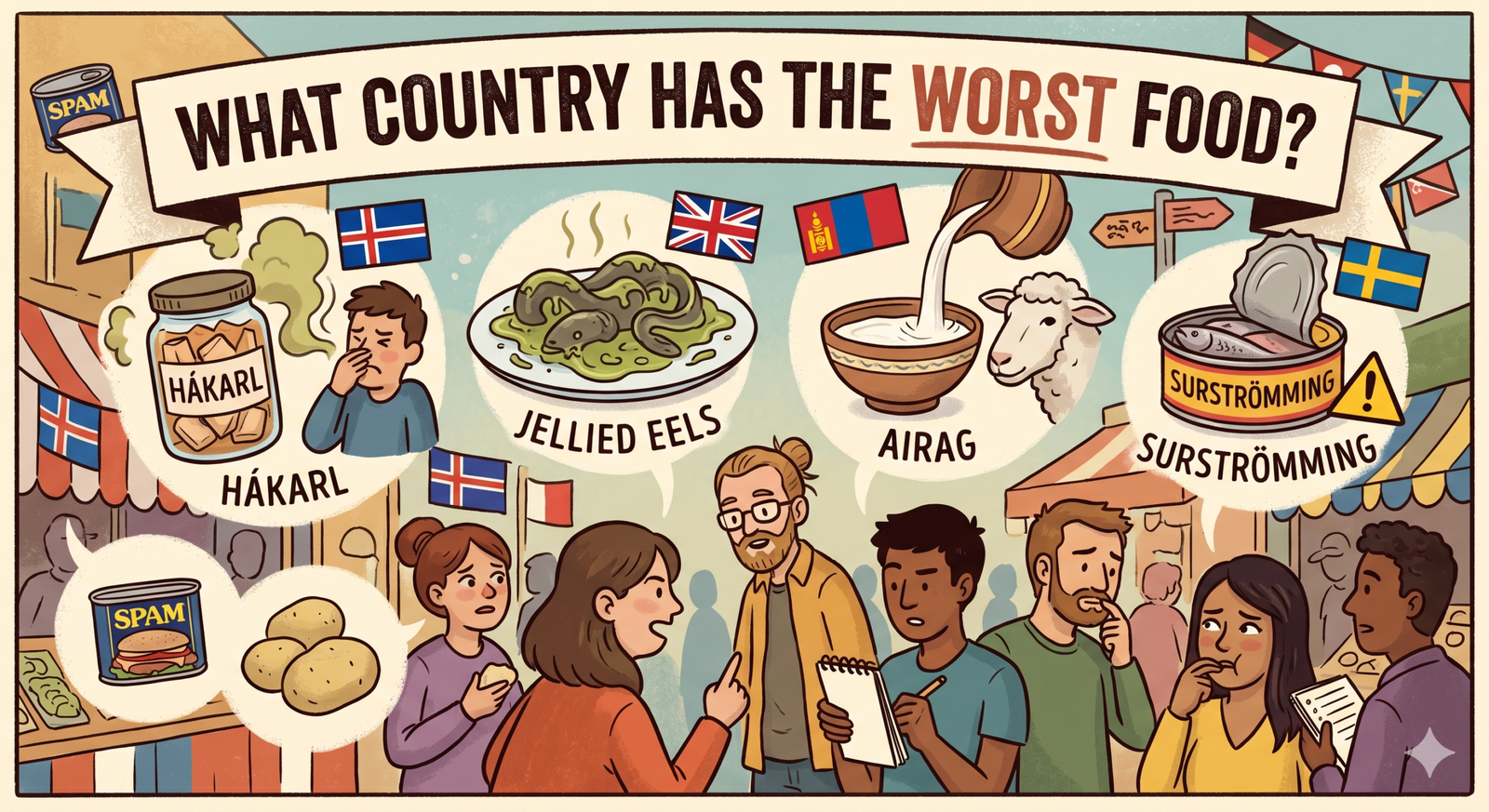
Travel is often synonymous with culinary exploration. For every backpacker chasing the perfect slice of Neapolitan pizza or a steaming bowl of authentic Vietnamese pho, there is another traveler sitting in a dimly lit restaurant, staring at a plate of unrecognizable, aggressively fermented ingredients, asking themselves a highly debated question: what country has the worst food?
It is a query that sparks endless arguments on travel forums, social media threads, and at dinner parties. However, before pointing fingers at any specific nation, it is crucial to state that such assessments are entirely subjective and depend heavily on diverse perspectives. Taste is shaped by what we grow up eating, and we are simply exploring the reputations, histories, and cultural contexts of these polarizing cuisines rather than providing a definitive or objective ranking. What one culture considers a pungent, unpalatable nightmare, another views as a deeply comforting delicacy tied to centuries of heritage.
Let’s take a culinary journey through the nations that frequently land on the wrong side of travelers’ tastebuds, and explore the fascinating reasons why their food is so often misunderstood.
The Subjectivity of the Palate and the Role of Geography
To understand why certain cuisines are globally beloved while others are widely criticized, we must first look at geography and history. The world’s most celebrated cuisines—think Italian, Mexican, or Thai—originated in fertile climates that support a massive variety of fresh produce, herbs, and spices. In these regions, flavor profiling was a luxury afforded by abundant nature.
Conversely, many of the countries that feature in discussions about “bad” food are located in harsh, unforgiving environments. In places where the primary goal of eating was surviving brutal winters or sustaining a nomadic lifestyle across barren steppes, preserving calories took precedence over refining flavor. Techniques like fermenting, pickling, and salting were matters of life and death, not culinary artistry.
Iceland: A Heritage of Harsh Winters
When travelers discuss the most challenging food globally, Iceland frequently dominates the conversation. Iceland is a stunning country known for its dramatic landscapes, but its traditional food is notoriously difficult for foreigners to stomach.
The most infamous example is Hákarl, which is fermented Greenland shark. Because the shark’s meat is naturally toxic when fresh, early Icelanders discovered that burying it underground and letting it ferment for months neutralized the toxins, though it left behind a powerful, ammonia-rich smell that many equate to cleaning products.
Other traditional dishes include Svið (singed and boiled sheep’s head) and Thorramatur (a buffet of cured meats and fish, including ram’s testicles and seal flippers). While modern Iceland boasts incredible contemporary restaurants and high-quality fresh seafood, traditional Icelandic survival food remains a massive hurdle for the uninitiated palate.
Mongolia: The Cuisine of the Steppe
Mongolia is another country that frequently receives low marks from visiting foodies. The reason is deeply tied to the country’s fascinating nomadic culture. Because a significant portion of the population has historically moved across the vast, arid steppes herding livestock, agriculture never firmly took root. Therefore, you will find a distinct lack of fresh vegetables, fruits, or spices in traditional Mongolian fare.
Mongolian cuisine is heavily—and almost exclusively—reliant on meat (primarily mutton and goat) and dairy. Meals often consist of simple boiled meat, root vegetables, and animal fats, designed to provide high caloric energy for cold days.
Aaruul: Dried, hardened cheese curds that are incredibly tough and sour.
Airag: Fermented mare’s milk, which is lightly alcoholic and very tart.
To a tourist expecting a burst of varied flavors, the repetitive and heavy nature of Mongolian food can feel incredibly bland and heavy. However, it is a brilliantly efficient diet for a nomadic lifestyle.
Great Britain: Shaking Off a Historical Stigma
No discussion about polarizing food is complete without mentioning the United Kingdom. For decades, Great Britain was the ultimate punching bag for culinary jokes, famously summarized by an old saying that the British “spent centuries conquering the world for spices and decided not to use any of them.”
The reputation for bland, boiled, and colorless food largely stems from the mid-20th century. During and after World War II, the UK was subject to strict rationing that lasted over a decade. A generation grew up having to stretch meager ingredients, which fundamentally damaged the nation’s culinary trajectory. Dishes like jellied eels, boiled vegetables, and plain meat pies became the stereotyped standard.
Today, this reputation is largely unearned. The UK has undergone a massive culinary renaissance. London is one of the premier food capitals of the world, and beloved modern British staples—from crispy, perfectly battered Fish and Chips to a rich Chicken Tikka Masala—prove that the country’s palate has dramatically evolved. Yet, the old stigma of the “bland British dinner” continues to haunt its global reputation.
The Nordics: Finland and Norway
Similar to Iceland, other Nordic countries like Finland and Norway often face criticism from travelers who find the food uninspired or overly salty. The traditional diets here were dictated by short growing seasons and freezing temperatures.
In Norway, one might encounter Lutefisk, whitefish treated with lye until it achieves a gelatinous texture, which is a highly polarizing dish even among locals. In Finland, a famous historical survey of Olympic athletes in the 1950s reportedly dubbed the host nation’s food as the worst they had encountered. Dishes like Blodplättar (blood pancakes, made with animal blood instead of milk) or plain boiled potatoes with salted fish lack the vibrant heat and acidity that many global tourists crave.
Cuba: When Supply Chain Dictates the Menu
While the countries mentioned above have cuisines shaped by climate, Cuba’s place on many travelers’ “worst food” lists is heavily influenced by modern geopolitics. While traditional Cuban recipes (like slow-roasted pork, black beans, and plantains) are phenomenally flavorful, the reality of eating in Cuba as a tourist can be surprisingly disappointing.
Due to strict embargoes and complex economic hardships, Cuba frequently suffers from severe agricultural shortages and a lack of imported goods. Spices, cooking oils, and even basic staples can be incredibly hard to source. As a result, many travelers report eating repetitive, unseasoned meals consisting of dry rice, basic beans, and canned vegetables. The “bad food” reputation here is less about a lack of culinary skill and more about a tragic lack of resources.
Conclusion: Reframing the “Worst” Food
Ultimately, attempting to definitively declare what country has the worst food is a futile exercise in bias. What a traveler might call “bland,” a local calls “subtle.” What an outsider deems “rotten,” an insider celebrates as “beautifully fermented.”
Food is the edible history of a nation. When we encounter a cuisine that doesn’t immediately thrill us with spices or vibrant colors, it is an invitation to look deeper at the landscape, the climate, and the history of the people who created it. The next time you find yourself staring down a plate of boiled root vegetables or pungent preserved fish, remember that you aren’t just eating a meal—you are tasting a culture’s resilience.
Read also : Bill Melugin Salary 2026 – Fox News Correspondent Earnings, Net Worth & Career
What country is most commonly said to have the worst food?
There is no single objective answer, as taste is highly subjective. However, in global travel forums and surveys, countries like Iceland, Mongolia, and the United Kingdom frequently appear in the debate. The reasons vary from unfamiliar preservation methods (like fermented shark in Iceland) to historical stereotypes (like the post-WWII rationing era in the UK).
Why do some countries have a reputation for “bad” or bland food?
A country’s culinary reputation is often shaped by its geography and history. In harsh climates with short growing seasons, such as the Nordic regions or the Mongolian steppes, historical diets prioritized survival and caloric density over complex flavor profiles. Techniques like fermenting, salting, and boiling were necessary to preserve food through long winters, resulting in dishes that modern tourists might find heavy, pungent, or bland compared to cuisines from spice-rich, fertile regions.
Is British food really as bad as people say?
Not anymore. The stereotype of British food being boiled, gray, and flavorless largely stems from the mid-20th century, when the UK endured strict food rationing during and after World War II. Today, the UK has experienced a massive culinary renaissance. Cities like London are global food capitals, and modern British cuisine boasts everything from high-end gastropub fare to internationally celebrated dishes like Chicken Tikka Masala.
Why is traditional Icelandic food so challenging for tourists?
Traditional Icelandic food was born out of extreme necessity in a harsh environment. To survive, early Icelanders had to get creative with preservation. The most famous example is Hákarl, which is Greenland shark meat that is fermented and hung to dry for months to remove natural toxins. While locals may appreciate it as a link to their heritage, the strong ammonia smell and distinct taste make it an incredibly challenging dish for unaccustomed travelers.
Can politics and economics impact how a country’s food tastes?
Absolutely. Cuba is a prime example of this. While traditional Cuban recipes are phenomenally vibrant and flavorful, tourists visiting the country often report eating very repetitive and unseasoned meals. This is largely due to complex geopolitics, strict embargoes, and economic hardships that disrupt the supply chain. A lack of access to imported goods, cooking oils, and spices can severely limit what local chefs and families are able to prepare, proving that a country’s culinary output is often tied to its current resources.
