


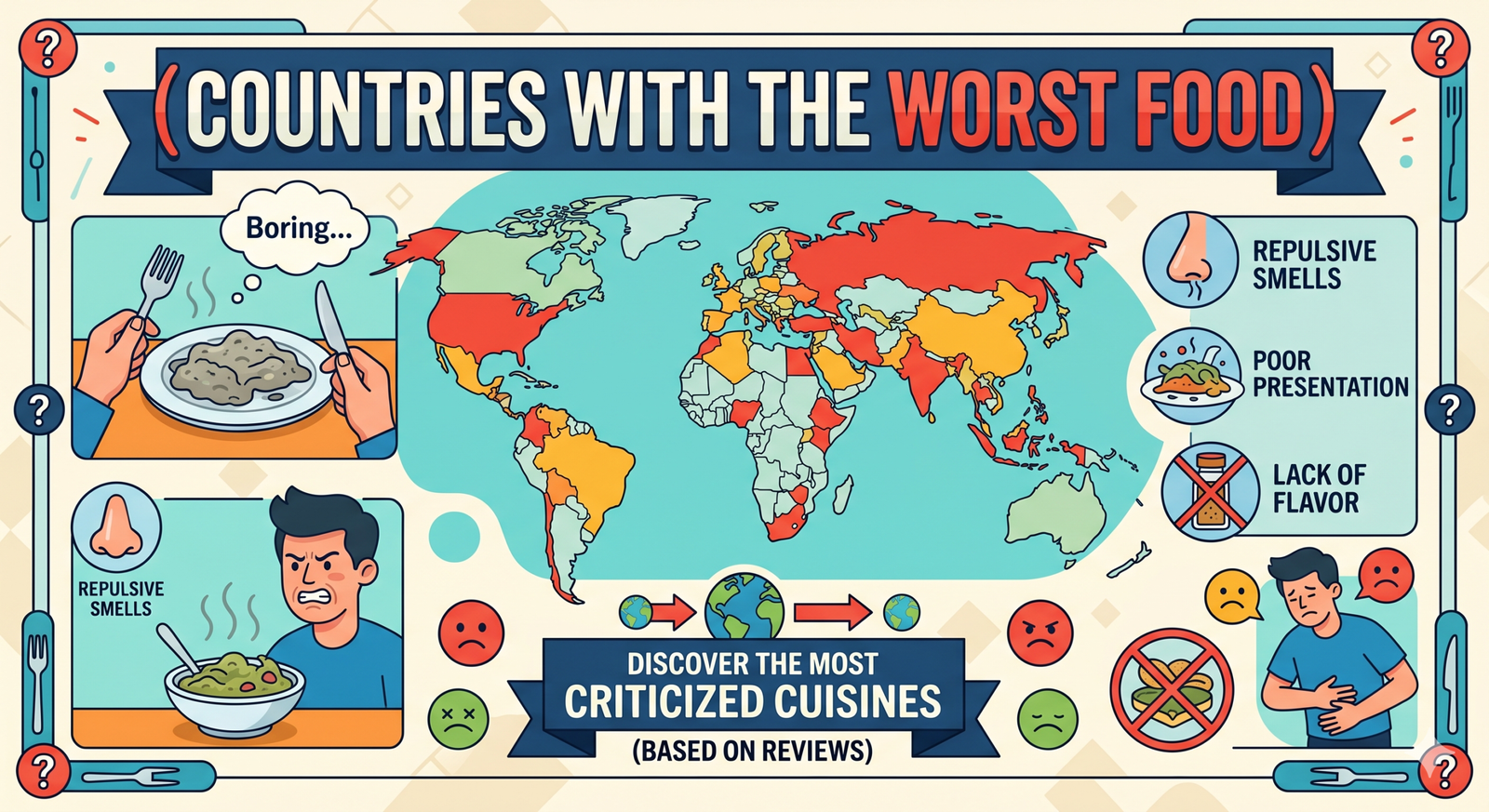
The Subjectivity of Taste
When planning a vacation, for many of us, the itinerary revolves entirely around our stomachs. We dream of rich bowls of pasta in Italy, vibrant street tacos in Mexico, and aromatic curries in Thailand. But what happens when you land in a destination where the local delicacies involve boiled mutton, fermented shark, or unseasoned root vegetables?
Search any travel forum, and you will inevitably find heated debates about the “countries with the worst food.” However, it is vital to state right off the bat: such assessments are entirely subjective and depend heavily on diverse perspectives, cultural backgrounds, and personal palates. What one traveler calls “bland,” a local might call “comforting.” What a tourist deems “inedible,” an indigenous community might revere as a historical survival staple.
Instead of treating these culinary rankings as objective facts, it is much more interesting to explore why certain countries consistently end up on the foodie chopping block. Usually, it boils down to harsh climates, geographical isolation, or a heavy reliance on historical preservation methods. Let’s take a culinary journey through the countries that frequently challenge the traveling palate.
Iceland and the Nordics: A Lesson in Survival
If you have ever browsed a list of the countries with the worst food, Iceland is almost always sitting near the top. The reason? Traditional Icelandic cuisine was born out of absolute necessity. In a land characterized by volcanic rock, freezing temperatures, and long, dark winters, nothing grows easily.
Historically, survival meant preserving whatever protein you could find so it would last for months. This birthed Hákarl (fermented Greenland shark), which possesses a pungent, ammonia-rich odor that most tourists find overwhelming. Another traditional dish is Svið (boiled sheep’s head) and Hrútspungar (pickled ram’s testicles).
While modern Reykjavik actually boasts a fantastic, high-end culinary scene with incredibly fresh seafood and lamb, tourists who dive into traditional Viking-era fare often leave traumatized. The same critique is frequently leveled at Norway, where Lutefisk (whitefish treated with lye) remains a polarizing, gelatinous acquired taste.
Mongolia: The Nomadic Diet
Mongolia is a breathtaking country of vast steppes, rugged mountains, and incredibly hospitable people. However, its cuisine is frequently cited by backpackers as a major challenge.
Mongolian culture is deeply rooted in a nomadic lifestyle. Because moving herds across the steppes does not lend itself to tending vegetable gardens, the traditional diet is almost entirely devoid of fresh produce and complex spices. Instead, it relies heavily on what the animals provide: meat and dairy.
Travelers often find themselves facing meal after meal of boiled mutton, often served with little to no seasoning. The dairy products are equally challenging to the Western palate, featuring Aaruul (hard, dried cheese curds that can test the strength of your teeth) and Airag (fermented mare’s milk), which has a sour, carbonated kick. It is a hearty, functional cuisine designed to keep nomads warm in sub-zero temperatures, but it rarely wins awards for flavor complexity.
visit also : trendlymora.com
Cuba: The Impact of Geopolitics
Sometimes, a country’s culinary reputation is shaped not by climate, but by politics. Cuba is world-renowned for its music, culture, and stunning beaches, but travelers are often let down by the food.
Unlike its Caribbean neighbors like Jamaica or Puerto Rico, whose foods are bursting with vibrant spices and diverse ingredients, Cuban food on the island is frequently described as repetitive and bland. The decades-long trade embargo and strict government rationing have severely limited access to essential culinary building blocks. Common cooking oils, a variety of fresh vegetables, and imported spices are often missing from the local kitchens. As a result, meals usually consist of simple rice, black beans, and whatever meat is available, often under-seasoned. While Cuban cuisine outside of Cuba (like in Miami) is deeply flavorful, the reality on the island is a testament to making do with severe limitations.
The United Kingdom: Shaking Off a Historical Stigma
The inclusion of the United Kingdom on any “worst food” list usually sparks an immediate argument. Historically, British food earned a dismal reputation—especially post-World War II, when rationing was still in effect. The stereotypes of gray, boiled vegetables, mushy peas, unseasoned stews, and heavy, stodgy pies became a global punchline.
Today, this reputation is largely outdated. London is undeniably one of the greatest culinary capitals of the world, boasting everything from Michelin-starred dining to incredible, authentic Indian and Middle Eastern food. However, outside the major metropolitan areas, travelers who wander into a random local pub might still encounter the heavy, deep-fried, beige-colored plates that gave the country its culinary infamy.
Costa Rica: Beautiful Scenery, Repetitive Menus
Costa Rica is a tropical paradise known for its lush rainforests, incredible biodiversity, and “Pura Vida” lifestyle. Yet, food-focused travelers often leave feeling underwhelmed.
The primary complaint about Costa Rican food isn’t that it is “gross” or “weird”—it’s that it is highly repetitive and lacks the bold, spicy punch found in Mexican or Peruvian cooking. The national staple is Gallo Pinto (rice and beans), which is eaten for breakfast, lunch, and dinner. While it is incredibly filling and provides great fuel for surfing or hiking, tourists often lament the lack of variety and seasoning after a week or two of the same dish. The reliance on safe, mild flavor profiles makes it a frequent mention on digital nomad and backpacker forums.
The Palate is in the Eye of the Beholder
When we label a destination as having “bad” food, we are usually just expressing homesickness or a clash of culinary expectations. We are judging a culture’s historical survival tactics against our modern, globalized privilege of having every spice in the world available at the local supermarket.
Read also : Exploring the “Top 10 Countries With the Worst Food”: A Subjective Culinary Journey
Why does British food have such a notorious global reputation for being “bad”?
Historically, the UK’s culinary street cred took a massive nosedive during and after World War II. Severe food rationing lasted for over a decade, forcing a generation to rely on canned goods, powdered ingredients, and boiled staples completely devoid of fresh herbs or spices.
Is traditional Icelandic food really as terrifying as travelers claim?
If your definition of a good meal involves fermented shark (Hákarl) that smells like ammonia, or a boiled sheep’s head (Svið), then yes, it’s exactly as intense as people say. These dishes exist because Iceland’s brutal volcanic landscape and freezing winters historically required extreme preservation methods to prevent starvation.
What are the main reasons a country ends up on a “worst food” list?
When travelers complain about a country’s cuisine on forums, it usually boils down to three main culprits:
Geographic and Climate Isolation: Regions like Mongolia or Scandinavia historically had short growing seasons, meaning traditional diets heavily favor meat, dairy, and preservation over fresh veggies and complex spices.
Geopolitical Restrictions: Extreme trade limits or economic rationing (historically seen in places like Cuba) can strip kitchens of basic ingredients, leading to repetitive, basic meals.
Flavor Profile Misunderstandings: Destinations like Costa Rica or the Netherlands offer fresh, healthy food, but their traditional dishes lean toward mild, functional fuel rather than bold, fiery spices.
Does “bland” food mean a country lacks a rich culinary culture?
Not at all. Labeling a cuisine “bland” is usually just a clash of cultural expectations. Many modern palates are highly globalized and conditioned to expect explosions of acid, heat, and sugar in every single bite.
How can I avoid bad meals when traveling to a poorly reviewed food destination?
You don’t have to pack a suitcase full of instant noodles. To eat well anywhere, try these simple strategies:
Skip the tourist traps: Restaurants directly next to major monuments usually serve the most uninspired, overpriced versions of local food. Seek out where local workers or students line up.
Go urban for variety: Capital cities and major hubs always feature diverse international dining scenes. If traditional local fare isn’t hitting the spot, pivot to global options.
Lean into local strengths: If a country is famous for its pastries, eat at bakeries. If they excel at seafood, skip the steak and stick to the fresh catch of the day.
