


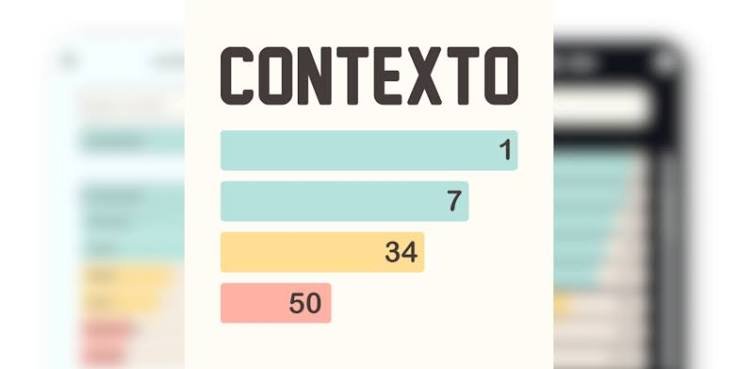
If you have ever stared at a growing list of rejected guesses in Contexto, wondering why “cat” scored nowhere close to the secret word, you already understand why a good Contexto hint can feel like a lifeline. Unlike letter-based games such as Wordle, Contexto challenges players purely on meaning, which makes strategic hint use one of the most valuable tools for actually solving the puzzle without giving up entirely.
This guide breaks down exactly how a Contexto hint works, when to use one, and how to make the most of that assistance without losing the satisfaction of solving the puzzle yourself.
What Is a Contexto Hint?
<cite index=”37-1″>Contexto is a daily word game where players guess a secret word, and instead of receiving letter clues, each guess is ranked by how semantically close it is to the answer</cite>. <cite index=”37-1″>A rank of 1 means you found the exact word, while a rank in the thousands means your guess is barely related at all</cite>.
A Contexto hint exists specifically to help players move past a plateau. <cite index=”34-1″>When you request a hint, typically by clicking the three vertical dots within the game interface, the algorithm provides a word that ranks closer to the secret answer than your current best guess</cite>. This gives you a meaningful nudge in the right direction without simply revealing the entire solution outright.
How the Ranking System Works Alongside Hints
Understanding Contexto’s color and number system makes any Contexto hint far more useful once you receive one. <cite index=”34-1″>Green indicates a guess ranked between 1 and 300, meaning you are very close to the secret word, while yellow covers ranks between 301 and 1500, and red represents anything ranked higher than 1500 and largely unrelated</cite>.
<cite index=”37-1″>Because the game relies on an AI language model measuring how often words appear in similar contexts, synonyms and closely related concepts consistently score best</cite>. That means a well-timed Contexto hint often points you toward an entirely different category of words than you were originally guessing, which can reshape your entire strategy for the rest of the puzzle.
How Difficulty Settings Change Your Contexto Hint
Not all hints are created equal, and the difficulty level you choose significantly affects how helpful each Contexto hint actually is. <cite index=”36-1″>On easy difficulty, using a hint gives you a word ranked at roughly half the position of your current best guess</cite>, offering a fairly generous jump toward the answer.
<cite index=”36-1″>On normal difficulty, a hint only provides a word one rank better than your current best guess</cite>, offering a smaller, more incremental improvement. <cite index=”36-1″>Hard difficulty is the least forgiving, providing a hint at a completely random rank rather than guaranteeing meaningful progress</cite>, which means players on harder settings need to rely more heavily on their own reasoning rather than the built-in hint system.
Choosing the Right Difficulty for Your Playstyle
If you are new to Contexto, starting on easy difficulty allows each Contexto hint to meaningfully accelerate your progress while you get comfortable with how semantic ranking works. More experienced players often prefer normal or hard difficulty specifically because the hints require more independent thinking, preserving more of the challenge the game is designed around.
Choosing the right difficulty ultimately comes down to whether you are playing Contexto for a quick daily win or genuinely want to sharpen your vocabulary and reasoning skills over time. For readers interested in exploring other semantic and vocabulary-based games, our related roundup of the best daily word puzzle games offers a few additional options worth trying.
Smart Strategies for Using a Contexto Hint Effectively
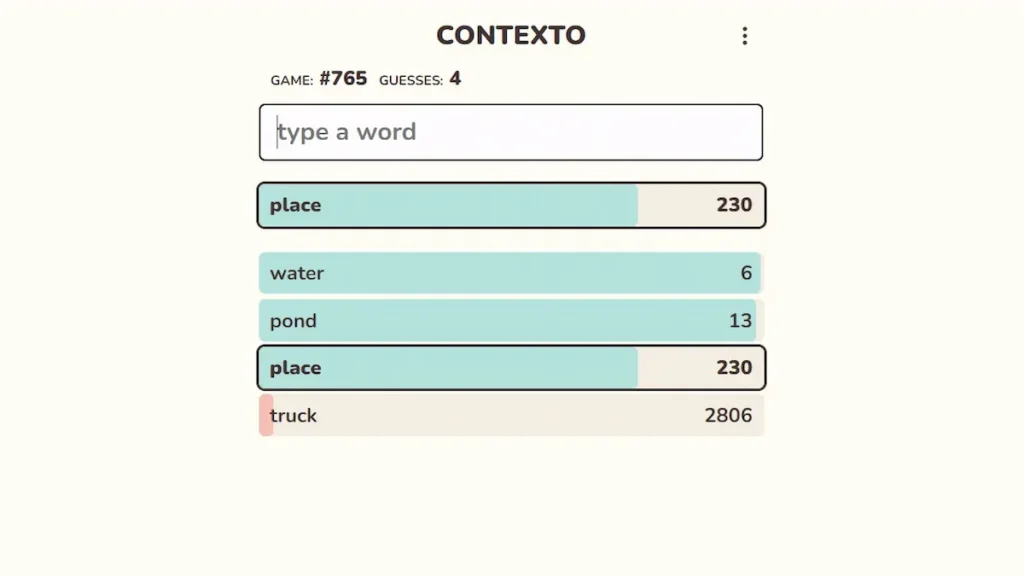
Requesting a Contexto hint too early can sometimes rob you of the satisfaction of solving the puzzle through your own reasoning. <cite index=”36-1″>A better approach involves starting with broad, general category words like “thing,” “person,” “place,” “animal,” or “emotion” before narrowing down based on your rankings</cite>.
Only once your guesses plateau in the yellow zone, without moving meaningfully closer to green, does requesting a Contexto hint typically make the most sense. This approach preserves the core challenge of the game while still giving you a safety net for particularly tricky daily puzzles. According to cognitive linguistics research, <cite index=”38-1″>working memory, vocabulary depth, and semantic flexibility are all trainable skills, and games built around meaning-based reasoning genuinely help strengthen them over time</cite>, making thoughtful hint use more valuable than simply rushing to the answer.
Avoiding Common Contexto Hint Mistakes
One common mistake is requesting multiple hints back-to-back without actually analyzing what each one reveals about the secret word’s category or theme. Each Contexto hint carries useful contextual information beyond just the word itself, and skipping that analysis wastes much of its strategic value.
Another frequent misstep involves ignoring the relationship between your recent guesses and the hint provided. If a Contexto hint suddenly shifts toward a completely different theme, that shift usually signals your previous guessing direction was off track, and adjusting your overall strategy at that point tends to produce faster results than continuing along the same path.
When to Use the Full Answer Instead of a Hint
Sometimes a single Contexto hint simply is not enough to crack a particularly difficult daily puzzle. <cite index=”38-1″>Most Contexto resources also offer a full answer option, often paired with several graduated hints so players can choose exactly how much assistance they want before revealing the complete solution</cite>.
This graduated approach allows players to preserve as much of the challenge as they want, using a Contexto hint for a gentle nudge or moving toward the full answer only when genuinely stuck. Either approach keeps the game accessible without completely eliminating the reasoning process that makes Contexto so engaging in the first place.
Conclusion
A well-used Contexto hint can transform a frustrating plateau into genuine progress, without stripping away the mental challenge that makes the game so satisfying to solve. By understanding how the ranking system works, choosing an appropriate difficulty level, and using hints strategically rather than impulsively, players can enjoy Contexto’s unique meaning-based gameplay while still building real vocabulary and reasoning skills along the way. Whether you rely on a single Contexto hint or work through several graduated clues, the key is finding the right balance between challenge and support for your own playing style.
Frequently Asked Questions
How does a Contexto hint work?
A Contexto hint provides a word ranked closer to the secret answer than your current best guess, helping guide your next attempt.
Does using a Contexto hint affect my score?
Yes, hints are typically tracked alongside your guesses and can affect how your final performance is displayed.
What is the difference between easy, normal, and hard hint difficulty?
Easy hints jump roughly halfway closer to the answer, normal hints move one rank closer, and hard hints appear at a random rank.
Can I get the full Contexto answer instead of just a hint?
Yes, most Contexto tools offer a full answer reveal alongside graduated hints for players who want complete assistance.
How often does a new Contexto puzzle appear?
A new Contexto puzzle typically begins each day at midnight, giving players a fresh secret word to solve.
more related blog
