


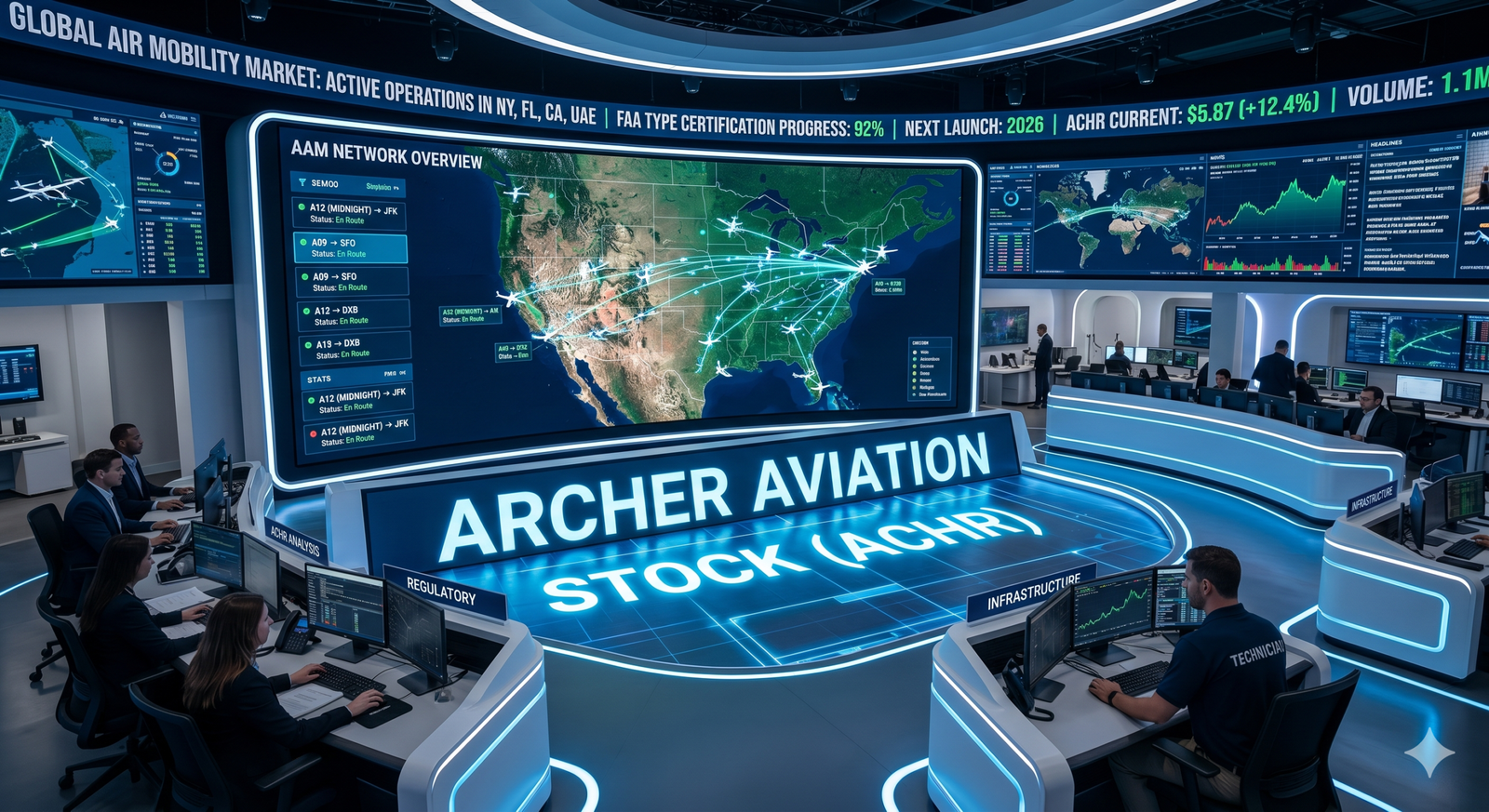
The dream of quiet, electric aircraft whisking passengers over gridlocked city streets is no longer a scene from a science fiction film. In 2026, the advanced air mobility (AAM) industry is standing on the precipice of its most significant milestone: the transition from experimental flight testing to legitimate commercial operations. At the heart of this revolution is Archer Aviation (NYSE: ACHR).
For investors, Archer Aviation stock represents a high-stakes bet on the future of transportation. As of early May 2026, the company is navigating a critical “credibility year,” where regulatory wins and manufacturing scale-up will determine if it can soar or if it will remain grounded by the immense capital demands of the aerospace sector.
The Current State of ACHR Stock
As of May 1, 2026, Archer Aviation’s stock closed at $5.87, reflecting a steady recovery from its 52-week low of $4.80. Despite a volatile start to the year, the company maintains a market capitalization of approximately $4.37 billion.
Wall Street analysts remain cautiously optimistic, maintaining a “Moderate Buy” consensus. With average 12-month price targets hovering around $12.00, some experts see a potential upside of over 100%. However, this optimism is balanced by the reality of Archer’s “pre-revenue” status; the company is still reporting significant quarterly losses as it pours resources into its Midnight eVTOL (electric vertical takeoff and landing) aircraft.
Regulatory Milestones: The Path to FAA Approval
Certification is the ultimate hurdle for any aerospace company. Archer has made historic strides in this arena, becoming the first eVTOL developer to receive 100% FAA acceptance of its “Means of Compliance”. This milestone established the specific criteria by which Archer must prove its Midnight aircraft is safe for public travel.
Key progress points in the certification journey include:
-
Final Airworthiness Criteria: Completed.
-
Part 135 & Part 145 Certificates: These crucial operational and maintenance certifications are already in hand.
-
Type Inspection Authorization (TIA): Archer is currently working toward TIA, which allows FAA pilots to begin formal flight testing.
These regulatory wins have tightened the link between Archer’s technology and practical deployment, reducing the “timing risk” that has historically plagued the sector.
Commercial Launch: 2026 and Beyond
Archer isn’t just building an aircraft; it’s building an ecosystem. Through a strategic partnership with United Airlines, Archer is developing the necessary vertiport infrastructure at major hubs like Newark Liberty International and Chicago O’Hare.
The company is targeting late 2026 for its first passenger-carrying flights. These initial operations are expected to launch through two primary channels:
-
US Pilot Programs: Participation in the White House eVTOL Integration Pilot Program (eIPP) with planned routes in New York, Florida, and Texas.
-
UAE Expansion: A major commercial launch program in the United Arab Emirates, where Archer plans to deliver Midnight aircraft for local air taxi services.
Financial Health: A Fortress Balance Sheet?
Aerospace development is notoriously expensive. Archer ended 2025 with record liquidity of approximately $2.0 billion. This “fortress” balance sheet provides a vital runway, allowing the company to fund its operations through the 2026 milestones without the immediate need for distress financing.
However, the burn rate remains a concern. Financial estimates for the first quarter of 2026 projected an Adjusted EBITDA loss between $160 million and $180 million. For long-term shareholders, the focus is less on quarterly earnings and more on how efficiently Archer can move toward its goal of hundreds of aircraft produced annually at its high-volume “ARC” manufacturing plant in Georgia.
Investment Risks to Consider
While the upside is significant, Archer Aviation is a speculative investment. Investors must weigh the following risks:
-
Execution Delays: Any setback in FAA Type Certification could push commercial launch dates further into the future.
-
Competition: Competitors like Joby Aviation are also making rapid progress, with Joby leading some commercial efforts in Dubai.
-
Capital Intensity: Until Archer begins generating meaningful revenue—projected by some to hit roughly $534 million by 2029—it will continue to rely on its cash reserves and potential future dilution.
Conclusion: Is Archer Stock a Buy?
Archer Aviation is no longer just a company with a blueprint; it is a company with a fleet of aircraft, a clear regulatory roadmap, and the backing of global giants like United Airlines and Stellantis.
The 2026 window is the most critical era in the company’s history. If Archer can successfully navigate the final phases of FAA testing and launch its first piloted passenger flights, the current stock price may look like a bargain in hindsight. For those with a high risk tolerance and a long-term horizon, ACHR offers a unique opp
read also : CoreWeave News 2026: The Rise of the AI Infrastructure Titan
