


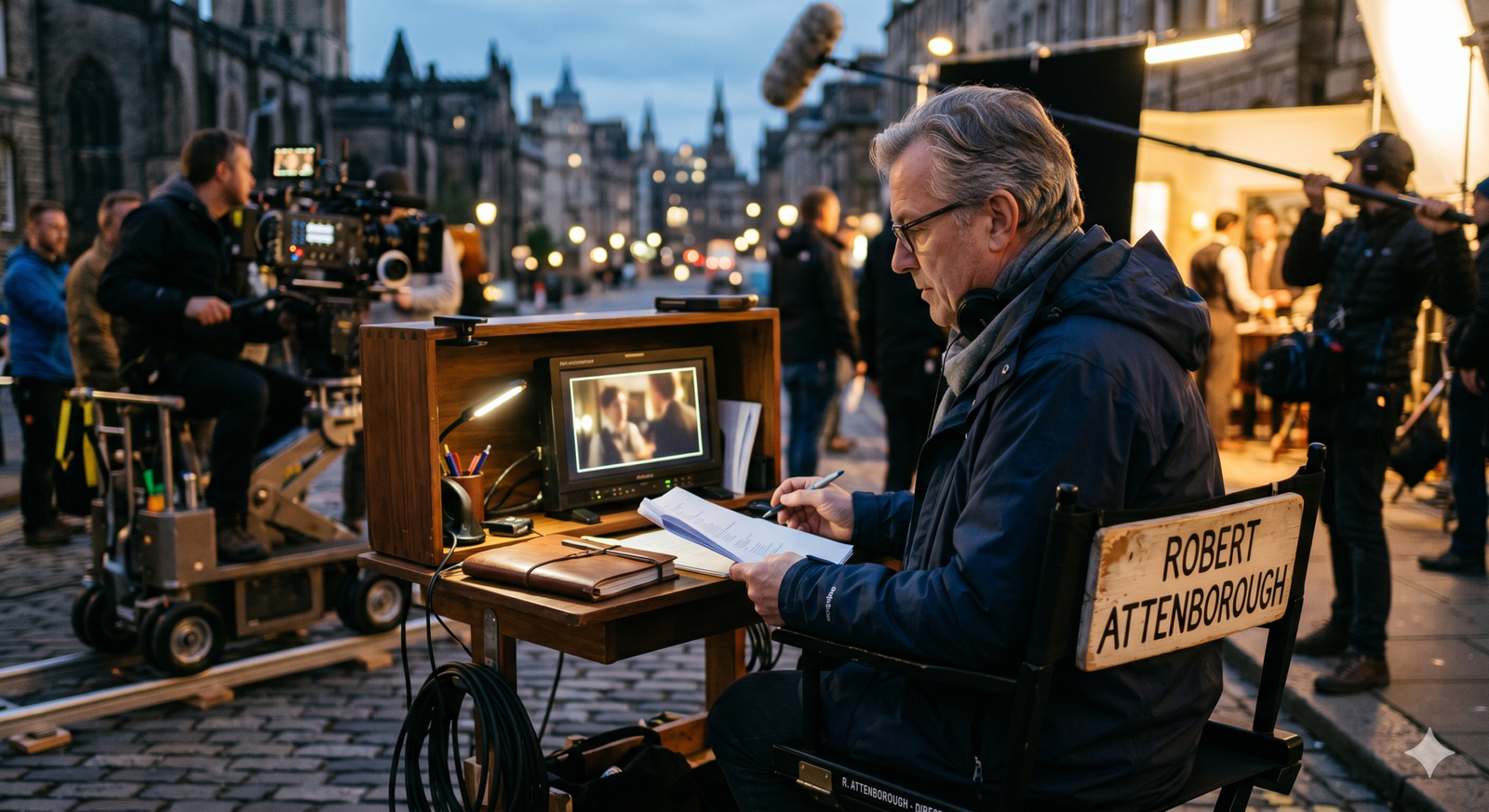
In the shimmering landscape of Hollywood, names often flicker and fade like celluloid caught in a projector flame. However, Robert Attenborough stands as a testament to the enduring power of grounded, intentional storytelling. Neither a recluse nor a headline-chaser, Attenborough has carved out a niche that sits comfortably between the high-octane spectacles of summer blockbusters and the whispered intensity of avant-garde indie films.
To understand Robert Attenborough is to understand a philosophy of “human-centric” cinema. In an era where CGI often does the heavy lifting, Attenborough remains a staunch advocate for the tactile, the real, and the raw. His career, spanning over three decades, serves as a masterclass in how to evolve with the times without losing one’s creative soul.
The Early Years: Formative Shadows
Every great director has a “Rosebud” moment—a spark that ignites a lifelong obsession. For Robert Attenborough, that spark wasn’t found in a grand theater, but in the dusty basement of his childhood home in London. Armed with a 16mm camera and an insatiable curiosity about how light interacts with shadow, a young Robert began documenting the mundane beauty of everyday life.
His education at the prestigious London Film School wasn’t just about learning the “Rule of Thirds” or the mechanics of a dolly zoom. It was where he developed his signature thematic DNA: the exploration of the “ordinary hero.” While his peers were busy trying to emulate Spielberg or Scorsese, Attenborough was looking at the silent struggles of the working class, the unspoken tension in a quiet room, and the way a single look can convey more than ten pages of dialogue.
Breaking the Mold: The Attenborough Aesthetic
What makes a “Robert Attenborough film”? If you ask any cinephile, they’ll point to three distinct pillars:
1. Naturalistic Lighting
Attenborough famously despises over-processed footage. He prefers to work with natural light sources, often waiting hours for the “golden hour” to hit a specific street corner. This gives his films a dreamlike yet authentic quality that makes the audience feel like they are voyeurs rather than spectators.
2. The Long Take
Unlike the “MTV-style” rapid-fire editing prevalent in modern action films, Attenborough isn’t afraid of silence or stillness. He utilizes long, sweeping takes that allow the actors to truly inhabit their space. This technique requires immense discipline from the crew, but the result is an immersive experience that builds tension organically.
3. Sonic Texture
Sound isn’t just background noise in an Attenborough production; it’s a character. Whether it’s the rhythmic ticking of a clock or the distant hum of a city, he uses soundscapes to anchor the emotional weight of a scene.
Key Filmography: A Journey Through Emotion
To truly appreciate the scope of his work, one must look at the milestones that defined his trajectory:
Each of these films represents a different facet of the human condition. The Silent Echo, for instance, remains a staple in film schools for its use of visual metaphors to represent the stages of mourning. On the other hand, The Last Intercept showed his ability to handle high-concept sci-fi without losing the intimate, character-driven focus he is known for.
The Challenges of the Digital Age
The transition from film to digital was a contentious time for many veterans. Robert Attenborough was initially a skeptic. He famously stated in a 2012 interview:
“Film has a heartbeat; digital has a binary code. One breathes, the other calculates.”
However, rather than becoming a dinosaur, Attenborough adapted. He began experimenting with high-end digital sensors but applied traditional color grading techniques to maintain that “filmic” warmth. He proved that the medium matters less than the vision behind it. Today, he is often cited by younger directors as the bridge between the “Old Guard” of cinema and the “New Wave” of digital innovators.
Legacy and Influence: Mentoring the Next Generation
Robert Attenborough’s impact isn’t limited to the screen. Behind the scenes, he is a prolific mentor. His production company, Attenborough & Associates, has a dedicated wing for “First-Time Filmmakers,” providing funding and equipment to voices from marginalized communities.
He believes that cinema is a democratic art form. “The best stories aren’t always in the boardrooms,” he often says. “They’re in the back alleys, the kitchens, and the quiet suburbs.” By championing diverse perspectives, he has ensured that his influence will ripple through the industry for decades to come.
Conclusion: The Horizon Ahead
As Robert Attenborough enters the later stages of his career, there is no sign of him slowing down. Rumors of an upcoming epic set in the post-war era have already sent the film world into a frenzy of anticipation.
In a world increasingly dominated by algorithms and “content” meant for quick consumption, the work of Robert Attenborough serves as a necessary reminder of what cinema can be: an art form that demands our attention, challenges our perceptions, and ultimately, makes us feel a little less alone in the dark.
Whether you are a student of film or a casual viewer, watching an Attenborough film is an invitation to slow down and see the world through a more compassionate lens. And in today’s fast-paced world, perhaps that is the greatest gift a filmmaker can give.
read also : MyArticleScout Review: The Ultimate Guide to Smarter Content Sourcing
